Managing your personal brand is an ongoing process that requires constant attention and effort to build and maintain one’s brand image. But doing so can significantly impact career success and professional relationships.


Positioning, differentiation, messaging, naming, and identity—everything that helps your brand stand apart and stay consistent.
BROWSE BY TOPIC
ALL | BRAND STRATEGY | MARKETING & GROWTH | LEADERSHIP & MANAGEMENT | SELF EMPLOYMENT & PRODUCTIVITY | IMPACT & RESULTS | NEWS
NEWSLETTERS
Managing your personal brand is an ongoing process that requires constant attention and effort to build and maintain one’s brand image. But doing so can significantly impact career success and professional relationships.

A company’s brand is its most valuable asset. Rebranding can provide significant benefits if done correctly. A brand overhaul can improve brand recognition, enhance customer engagement, and help a company stay relevant in a constantly evolving market.

Effective brand naming isn’t emotional or political—it’s strategic. It should align with your positioning, resonate with your audience, and be memorable enough to stand on its own. More than a trivial detail, a name plays a critical role in shaping perception, signaling value, and reinforcing your brand’s promise. A weak or confusing name can dilute impact and force your brand to work harder to stay top of mind. Ultimately, naming is both a creative and disciplined process that deserves as much attention as any other aspect of branding.
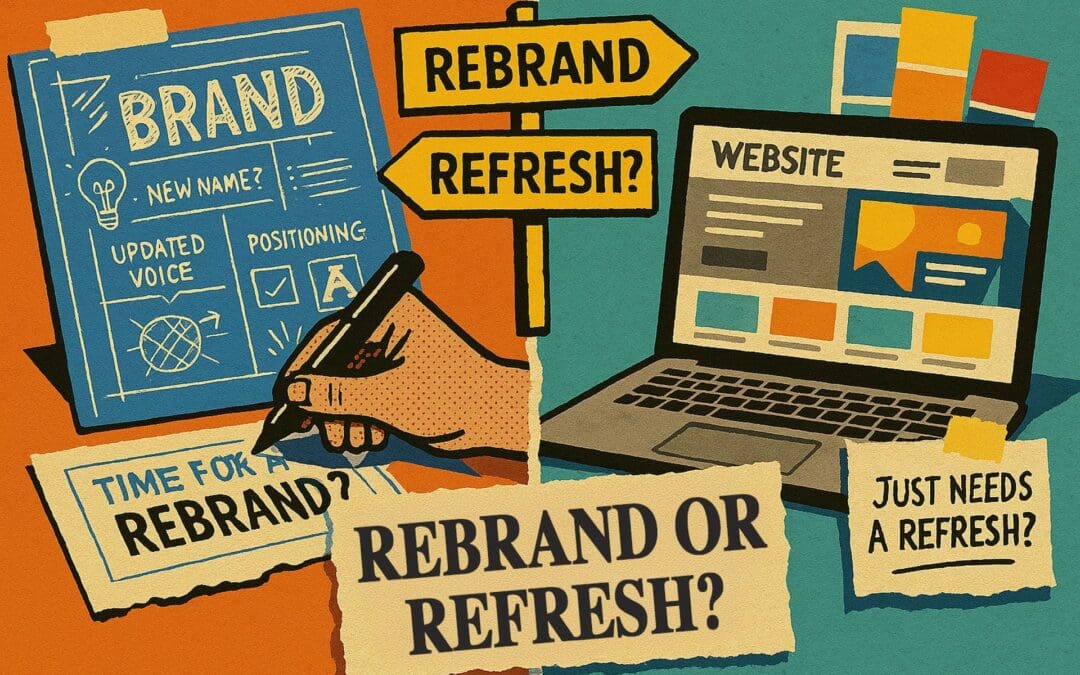
No business can afford to rest on its laurels. While your company may be keeping up with economic and market changes, is your brand keeping up? Does your website communicate to your target audience how you’re keeping up?
You may be trying to decide if you should rebrand your business, or just update your website. Here are 10 factors to consider helping you make your decision.

A logo is a powerful visual representation of your company. It...

Renaming during a rebrand isn’t just about getting a fresh look—it’s a strategic move that can redefine how your brand is perceived. Key considerations for choosing a new name include competitive analysis, psychological impact, cultural fit, trademark and domain availability, and the supporting role of taglines. Done thoughtfully, renaming can clarify your value, position you for growth, and signal a bold new chapter in your brand story.
Why are some brands admired while others struggle to stand out? The strongest brands consistently enable, entice, and enrich their customers, creating deeper trust, stronger emotional connections, and long-term loyalty. Learn how the 3 Es can help you evaluate and strengthen your own brand.
To provide a comprehensive user experience across multiple mediums, a true responsive design isn’t limited to context or shrinking content on a page. Subtle design considerations, such as the icons and logos should also be flexible enough to follow similar contextual responsive principles.
An advantage of marketing a small business is the flexibility to try new strategies to grow your business.
Though you may be flexible enough to try new marketing tactics to grow your business is your logo?