Most people associate marketing with advertising, social media, and other promotional activities. But promotion is only one part of the marketing mix. Understanding the difference can help businesses make better marketing decisions.
10 Questions. 10 Minutes. What’s helping, or hurting, your brand? →

BROWSE BY TOPIC
ALL | BRAND STRATEGY | MARKETING & GROWTH | LEADERSHIP & MANAGEMENT | SELF EMPLOYMENT & PRODUCTIVITY | IMPACT & RESULTS | NEWS
NEWSLETTERS
Most people associate marketing with advertising, social media, and other promotional activities. But promotion is only one part of the marketing mix. Understanding the difference can help businesses make better marketing decisions.
When a client tells me their marketing isn’t working, they’re usually talking about Promotion, things like advertising, content, newsletters, and social media. They want to do more to reach more customers. But marketing has many interconnected moving parts, and Promotion, the fourth P in the famous marketing mix, is only one of them. The real problem is often somewhere among the other seven. Positioning, though last on the list, is the foundation that makes those seven coherent. Before you add another tactic to your marketing plan, take a hard look at which of the eight Ps actually needs attention.

You can have a great product, smart pricing, and a polished website and still struggle to grow. Often the missing piece is Positioning, the last of the eight Ps of marketing and the foundation beneath the other seven. Here’s how all eight fit together, and how to find the one that needs your attention.

AI will make relationship capital the most valuable asset a solo business owner has. Not content. Not funnels. Not automation. The old, slow work of building trust with real people. Technology can help keep you visible, but only relationships make you memorable.

AI is changing how customers discover and evaluate businesses, often before they ever speak to you. But the skills that matter most may be the oldest ones: relationships, trust, and reputation. Relationship capital may be the most important business asset in an AI-driven world.
If you haven’t started thinking about 2027, it’s a good time to start, because next year is only 100 or so days away. Starting to plan for next year now means you won’t panic in March when nothing has changed and you’re wondering where all the new business is. The fix isn’t posting more or spending more; it’s knowing what to stop, what to protect, and what to start.
Your business may be more sophisticated, experienced, and valuable than it was five or ten years ago. But has the way you present it kept up? If not, you may be inadvertently surrounding $600 worth of value with $40 signals.
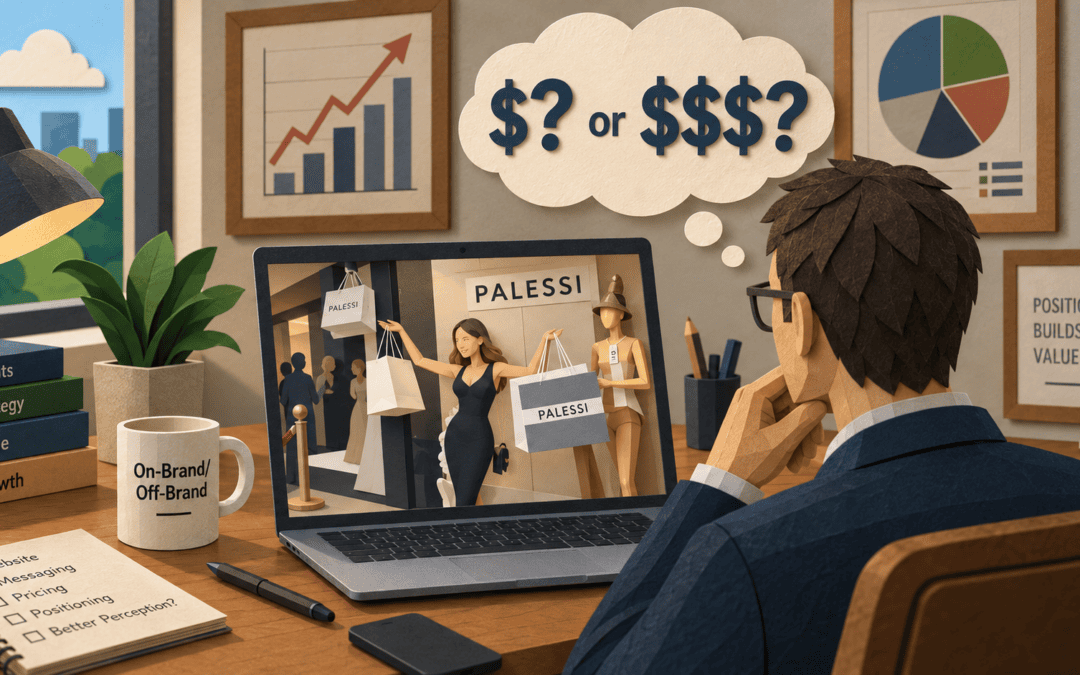
Your business may have become more sophisticated, experienced, and valuable while the way you present it stayed the same. The Palessi experiment offers a powerful lesson in how positioning shapes perception, and what happens when the signals surrounding your business don’t match the value you actually deliver.
You don’t always know what’s “on-brand” until you’re standing in the middle of it. A regularly scheduled board meeting lost its agenda and turned into an unplanned 90-minute roadmapping session. A reminder that the best work often skips the plan entirely. Recognizing that moment when it’s happening isn’t luck; it’s a skill worth building on purpose.
When business slows down, don’t think of the extra time as free time. Think of it as available capacity. Use it to create something, market your business, try an experiment, clean up what you’ve neglected, and stay visible. You can’t control when new business comes through the door, but you can control what you do while you’re waiting.
One A Day Vitamin’s decision to cast Ludacris as their spokesperson wasn’t random. It’s a lesson in understanding your brand’s audience. Knowing your audience isn’t just their age, income, or job title, it’s understanding what they value, who they trust, and how they see themselves. The brands that win go beyond demographics.
Businesses evolve gradually through new services, bigger clients, deeper expertise, and changing ambitions, but their positioning doesn’t always evolve with them. When the story falls behind the business, referrals get weaker, prospects get confused, and websites stop converting. The answer isn’t necessarily a rebrand. It’s making sure how you describe the business reflects the business you’ve actually become.